

The Yorkshire Naturalists' Union is a registered charity (No. 224018) run by an Executive Committee of up to nine trustees, elected at the AGM for three year terms.
The Constitution and Rules of the Yorkshire Naturalists' Union can be downloaded here.
Below are links to minutes of previous recent AGMs, along with a link to the current Executive and existing Vice-presidents. A list of past presidents can be accessed here.
Meet the YNU
The YNU Membership Booklet, published each January, contains a wealth of information, including names and contact details of all those involved in running the organisation, from the Executive (the trustees) to the Section Leaders and Recorders. Each month this section of the website will be updated with a short ‘interview’ with some of these people, putting a face to the name! Previous interviews can be viewed here, and June's interview is with Andy Millard, editor of The Naturalist, Chair of the YNU Executive and Recorder for Aculeates.
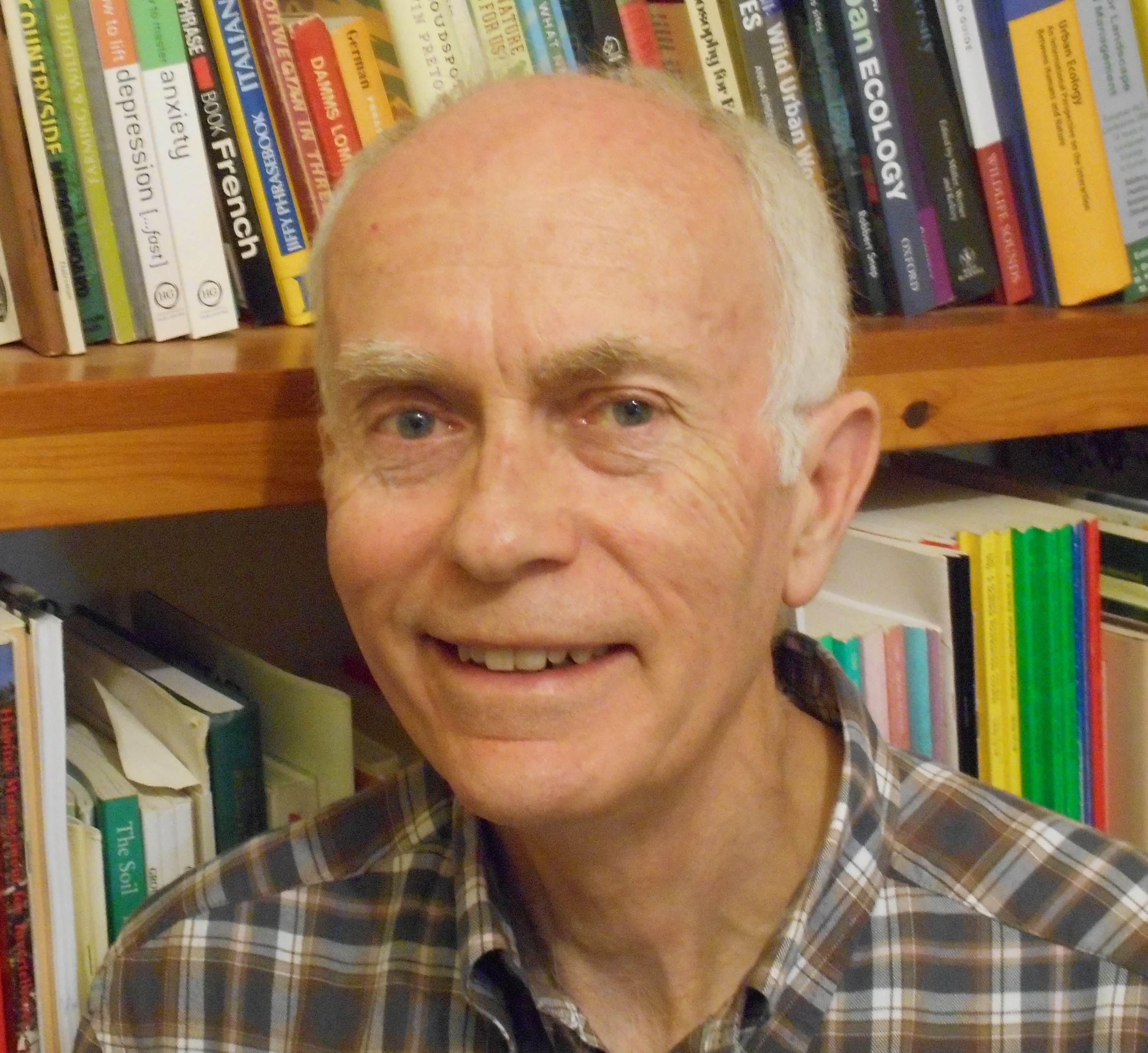
How did you get involved with the YNU?
In 1994 I was on the Council of the Yorkshire Wildlife Trust, along with John Newbould, a longstanding member of the YNU, which he suggested I should join. I duly did, but as a passive member for a number of years, until, in the mid-noughties it was suggested I might be able to assist Albert Henderson with producing the Bulletin. I was then persuaded to join the Executive Committee and, in 2010, the working group looking at combining our two regular publications, The Naturalist and Bulletin. Subsequently I joined the editorial board set up for the new format Naturalist.
How long have you been in your role, and what does it entail?
I have been receiving editor on the Editorial Board (EB) of The Naturalist since 2011. This has involved circulating articles for consideration by the EB, liaising with authors and reviewers, and contributing to editorial decisions. Since 2025 I’ve also been responsible for organising the sequence of articles and final ‘type setting’ of an issue. In 2019 I became Chair of the YNU Executive, entailing the running of Executive meetings and drawing upon the experience and expertise of others to promote the future development of the YNU.
What part of your role or membership of the YNU do you enjoy the most?
I can’t differentiate between studying and learning about a fascinating group of insects (see below!), visiting a variety of interesting excursion sites around Yorkshire and working with a very friendly, constructive group of fellow enthusiastic naturalists.
What is your specialism/area of interest and what drew you to it?
With respect to natural history, I’ve always thought of myself as a ‘Jack of All Trades and Master of None’! I’ve long had an incipient interest in insects and particularly the intriguing life histories and ecology of the aculeates (bees, wasps and ants). When Michael Archer resigned as aculeate recorder in 2019, I took over but from a much lower level of expertise than my predecessor - much scope for learning in my post-retirement years!
Do you have a favourite site to visit in Yorkshire, or a favourite species you’ve seen in our region?
Impossible to answer because Yorkshire has such a variety of landscapes, habitats and species, which together, make it a wonderful place to study natural history.
The previous interview was with Richard Wilson, Recorder for Araneae, Opiliones and Pseudoscorpiones.
How did you get involved with the YNU?
I had heard of the YNU shortly after I arrived in the county to study for my MSc in Biodiversity & Conservation at the University of Leeds (in 1999). I joined shortly after buying our first house and being able to set up my microscope and office in the small bedroom, allowing me to start a focussed effort on recording arachnids (spiders & harvestmen) in the county, recognising that my records would be useful to the society as well as the national recording society administered by the British Arachnological Society.
How long have you been in your role, and what does it entail?
Colin Howes recommended me to be the YNU's spider recorder in the autumn of 2009, which I was only too happy to accept, considering it an honour to represent the society in this capacity. I had already started to record at a few locations such as Potteric Carr, near Doncaster and an urban nature reserve (Rodley, Leeds) near where I used to live. This also allowed me to review spider recording in Yorkshire which soon introduced me to the sterling efforts of Clifford Smith, an earlier predecessor.
My role is honorary, but I am very fortunate to work as an applied entomologist, which includes working in various locations nationally but including Yorkshire. So, I get to record spiders and other invertebrates in a wide range of habitats, environments and localities, not all of which are typically visited by the amateur naturalist. I also welcome records from a few individuals based in the county, and more recently, act as a verifier on the iRecord platform for all of Yorkshire's five vice-counties.
My most recent achievement has been the writing and production, updating Clifford Smith's privately published Atlas of Yorkshire Spiders (in March 1982). This was published in October 2025 and includes for the first time, the 26 species of harvestmen, in addition to the 430 species of spider. The work describes the fauna in the county in the context of habitats and environments, as well as individual species distribution maps.
What part of your role or membership of the YNU do you enjoy the most?
I enjoy many aspects of the role. In addition to the recording and regular submission of articles describing my and fellow naturalists' recording efforts in the county, when I can find the time around work and family commitments, going on the field excursions and meeting other recorders, knowing I am playing a part in furthering the long-standing exploration of the county's flora and fauna. I try and make one excursion a year.
What is your specialism/area of interest and what drew you to it?
Spiders & harvestmen (did I mention I have written a book?) are my primary interest which developed from my teenage years when I was living in Bedfordshire. Professionally, I study a wider range of invertebrates, primarily beetles, bugs, flies and the 'stinging' bees and wasps.
Do you have a favourite site to visit in Yorkshire, or a favourite species you’ve seen in our region?
I have made a special effort to record in the Yorkshire Dales, and especially within the upland environments. There has been a focus, a small money-spider called Semljicola caliginosus. It was originally described by the YNU's first spider recorder, William Falconer from specimens collected in May 1909 from Marsden Moor, above Huddersfield and given the name Eboria caliginosa, which can be translated as 'Yorkshire's cloud-living' spider. It was subsequently transferred to the genus Semljicola (pronounced Sem..ji..cola) and lost the reference to Yorkshire. The species is still extant in the county, Yorkshire being the southernmost location in Britain (and I think globally) where it occurs.
YNU Annual General Meeting
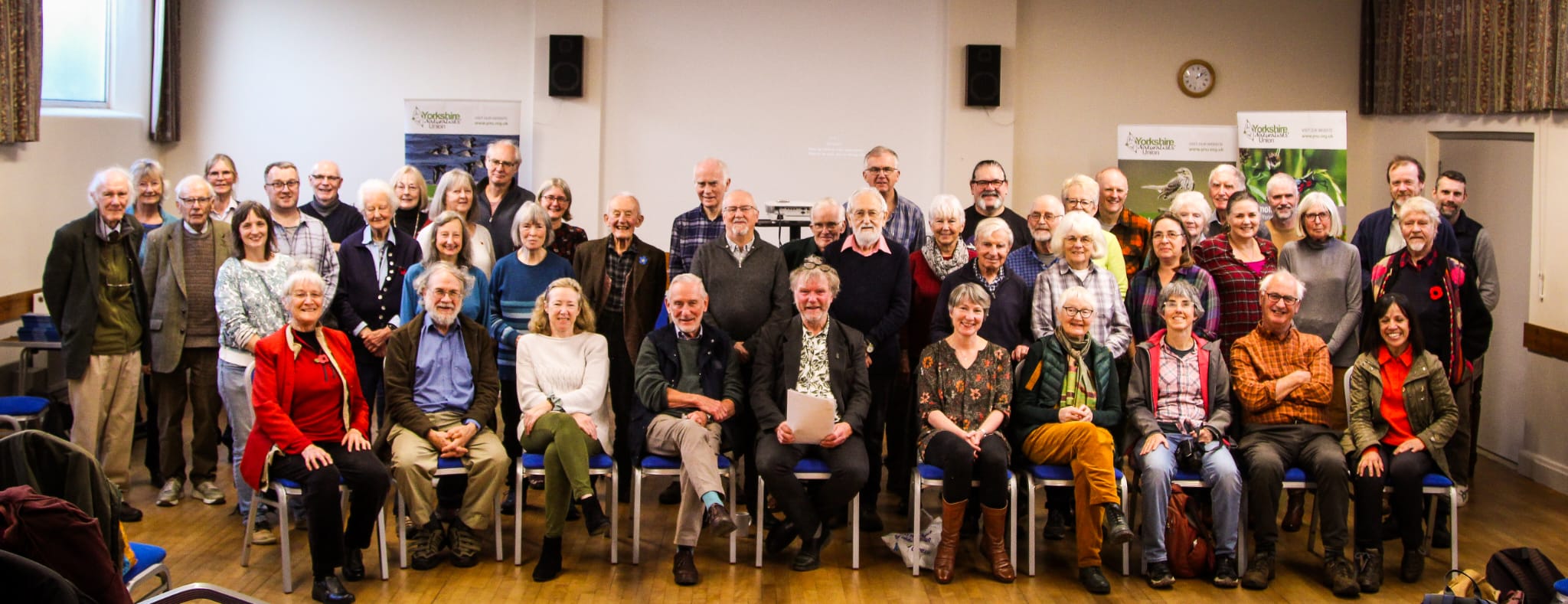

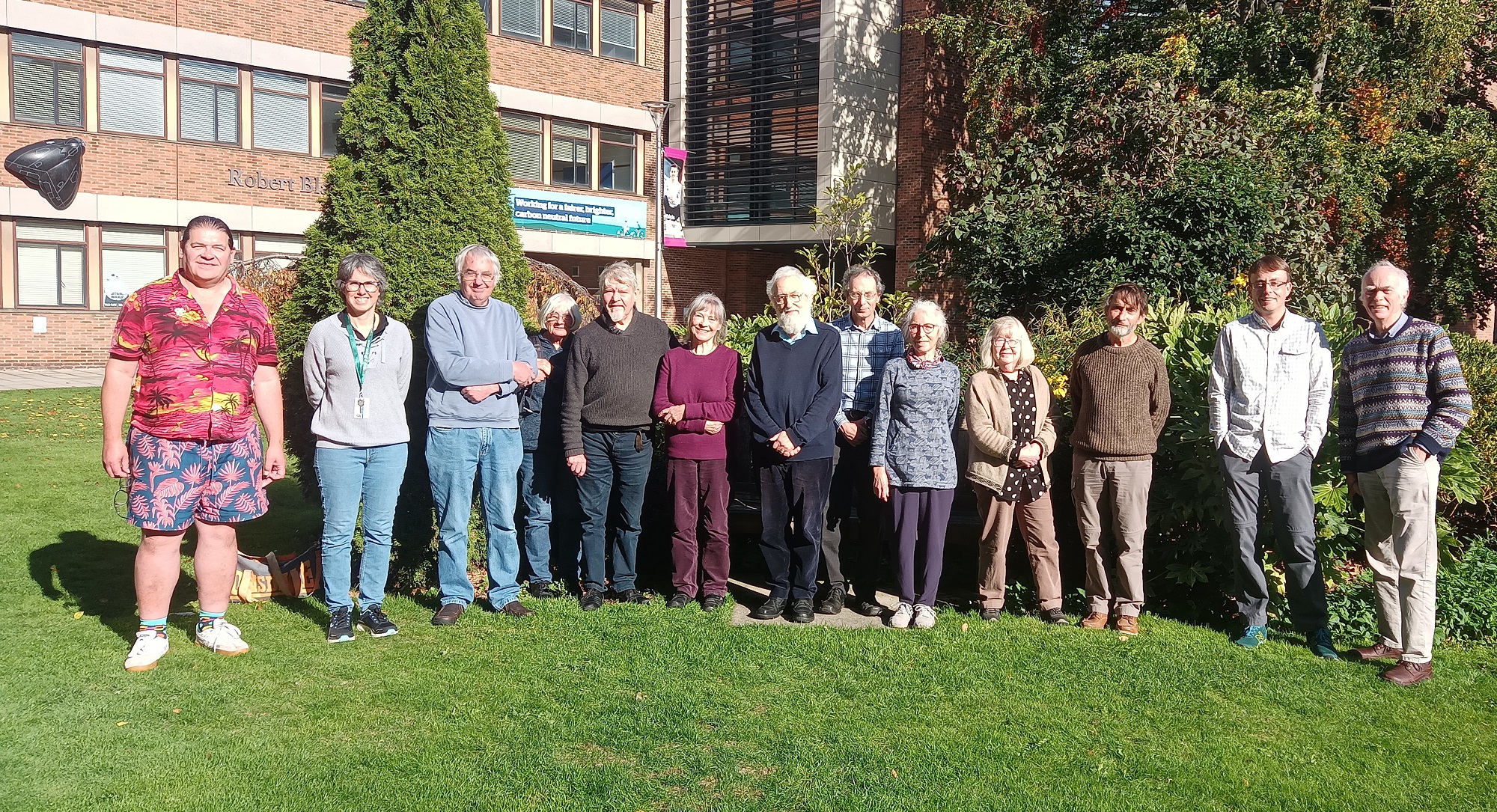
YNU members at the 2025 AGM in Leyburn (top), the 2023 AGM in York (bottom left) and the 2022 AGM in Hull (bottom right) with additional members attending via Zoom in each case.
YNU Annual Reports and Accounts can be found on the Charity Commission website.
YNU Expenses
Expenses may be claimed when undertaking voluntary work for the YNU. These are usually limited to food, drink and travel. If possible, travel should be by public transport (e.g. 2nd class rail fare) but otherwise private car use can be claimed for at 45p per mile. Claim forms are available from the YNU Membership Secretary (This email address is being protected from spambots. You need JavaScript enabled to view it.) to whom they should be returned, along with scans of receipts/tickets for claims other than private car use.